Condo dryer vent responsibility typically splits between unit owners, who maintain interior vent runs, and HOA boards or property managers, who oversee shared exhaust systems per governing documents and local fire codes. Kealey’s Duct and Dryer Cleaning, serving the North Shore of Massachusetts, the New Hampshire Seacoast and southern Maine, helps boards and managers sort out who handles which part of the system.
Key Takeaways
- Condo associations typically maintain common dryer vents; unit owners maintain individual unit vents
- Lint buildup creates fire hazards requiring professional cleaning at least once yearly
- Review your condo’s governing documents to clarify responsibility between association and individual owners
- Kealey’s Duct and Dryer Cleaning serves North Shore MA, Rockingham County NH, York County ME
Who covers dryer vent cleaning in a condo?
No single rule answers who is responsible for dryer vent cleaning in a condo. Responsibility shifts from building to building, shaped by local codes and the specific governing documents each association adopts. A unit owner in Salisbury may hold a different obligation than a neighbor three towns over in Portsmouth.
The deciding factor usually sits in paper, not practice. Condo Declarations, By-Laws, and Covenants generally split maintenance duties along one line: exterior components versus interior ones. A dryer duct running solely within a unit’s walls often falls to the owner. A duct feeding into a shared exterior wall, rooftop stack, or common chase typically falls to the association.
Does the HOA or the owner clean the vent?
The answer depends on where the vent sits relative to the unit boundary defined in the governing documents. Owners typically maintain ductwork contained entirely within their own walls. Boards typically maintain shared trunk lines, exterior terminations, and any rooftop dryer vent serving multiple units.
What should boards check before assigning the task?
Boards should review the Declaration and By-Laws line by line before assuming responsibility rests anywhere. Confirming the boundary in writing prevents disputes when lint buildup causes a slow dryer or, worse, a fire hazard traced back through a shared dryer vent building system.
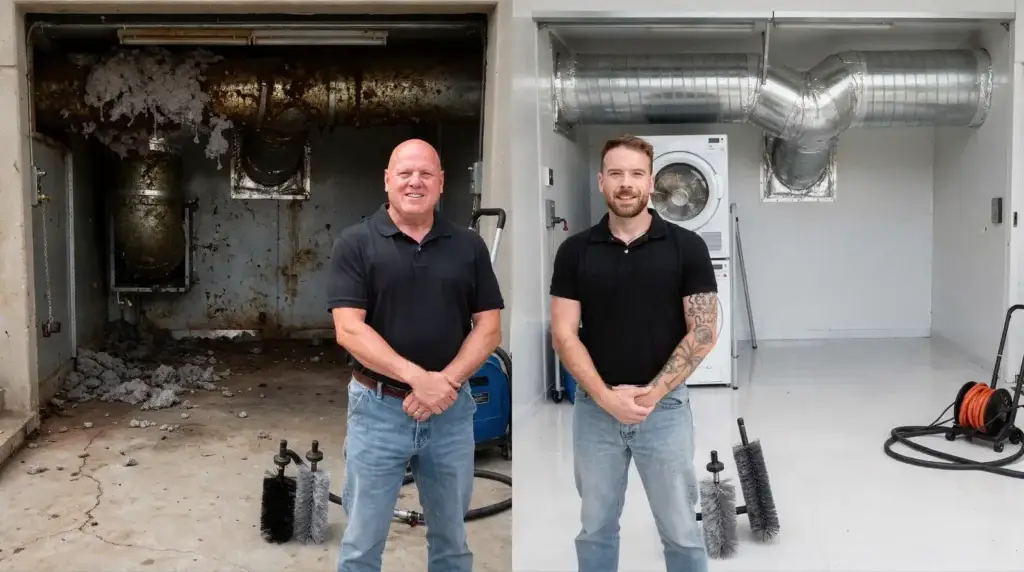
Property managers coordinating multi unit dryer vent maintenance need documentation they can hand to a board, not a verbal summary. Kealey’s provides a price before work begins and photos of what came out of the vent, giving associations a clear record for every unit serviced. That paper trail supports condo dryer vent cleaning for property managers tasked with proving compliance across an entire building, not just one line item. Kealey’s Duct and Dryer Cleaning handles condo dryer vent cleaning across North Shore MA, Rockingham County NH, and York County ME, working directly with boards and managers to clarify scope before the first vent gets opened.
What makes a shared dryer vent building different?
Condominium properties rarely give each unit its own standalone duct running straight outside. Instead, most shared dryer vent buildings rely on shared or semi-shared venting structures that connect multiple laundry appliances into one exhaust network. That structural difference changes everything about maintenance, cost, and who bears responsibility when airflow fails.
In practice, this takes one of two forms. An individual unit’s dryer stack may run through the unit and tie into a common chase before exiting the building. Or the venting may travel a shared vertical shaft that serves stacked units across several floors, from the ground level up to a rooftop dryer vent termination.
Why does a shared shaft raise the stakes?
A single restriction anywhere in that shaft affects every unit tied into it, not just the one running the dryer. Lint buildup in one owner’s section of duct slows airflow for neighbors above and below. Multi unit dryer vent maintenance has to account for that shared physical reality. A problem on the third floor can originate two floors down.
What happens when lint builds up in a shared line?
An obstructed line forces the dryer to run hotter and can stretch a single load into two or three cycles just to finish drying. In a shared run serving several appliances, that strain compounds. Every added unit connected to the same shaft multiplies the heat and moisture load the duct has to carry.
Because the path stretches from an interior connection all the way to an exterior termination, a real cleaning has to clear the entire run, not just the first few feet near the machine. That full-path standard matters most for property managers overseeing buildings where one blocked section can compromise several households at once.
What do condo bylaws actually require?
Condo bylaws rarely spell out who is responsible for dryer vent cleaning in a condo in plain language. Most governing documents instead draw a line between “common elements” and “limited common elements,” leaving vent ductwork in a gray zone that boards must interpret case by case. Whatever the documents say, lint in a vent is a fire risk, so someone has to own the cleaning. An association attorney or manager can confirm how your documents read.
That distinction matters most in a shared dryer vent building, where multiple units tie into one vertical or horizontal run. A single clogged section affects every unit connected to it, which is why boards increasingly treat condo dryer vent cleaning as a building-wide maintenance line item rather than a per-unit chore.
Does the HOA or the homeowner pay for vent cleaning?
Payment responsibility depends on how the governing documents classify the ductwork. Bylaws that name the vent a common element typically assign cost to the association budget; bylaws that stay silent often default the cost to the unit owner.
What happens if bylaws don't mention dryer vents at all?
Boards should not wait for a problem to act. A written policy, even without explicit bylaw language, tells owners what to expect and supports multi unit dryer vent maintenance planning.
A family-owned operation gives boards a consistent, single point of contact rather than a rotating cast of subcontractors each season. Kealey’s documents every job, producing a paper trail boards can present during fire-code compliance review or insurance audits. Many boards pair vent work with air duct cleaning between tenants.
Why do rooftop dryer vents raise fire risk?
Height and distance create the danger. A rooftop dryer vent carries warm, moist air from a unit’s dryer through a dedicated duct system that often must travel several stories before reaching the building exterior. That long, upward path exists to clear heat and humidity from the laundry room. The same ductwork steadily traps highly flammable lint along the way. The farther the run, the more surface area lint has to cling to.
Multi-story condo buildings compound the problem. Older housing stock across the North Shore and Seacoast region frequently includes longer, more complex vent runs.
Lint packed in a dryer line is the leading cause of dryer fires, and a long rooftop run gives it more places to collect.
Does a rooftop vent location make cleaning harder?
Yes. Roof-level termination points sit farther from ground access and often require specialized equipment to reach safely. Buildings with a shared dryer vent building layout also risk one blocked branch affecting airflow for multiple units, not just one.
Who should monitor rooftop vent conditions?
Boards and management companies should schedule routine inspections of rooftop terminations. Lint accumulation there is invisible from inside any single unit.
How can property managers stay ahead of vent risk?
Staying ahead means scheduling inspections before a clogged line becomes a fire hazard or a maintenance complaint. Proactive dryer vent cleaning for property managers protects both residents and the building’s liability record. Waiting for a complaint means waiting too long; lint accumulates quietly. By the time airflow drops noticeably, the line may already pose a fire risk.
Kealey’s Duct and Dryer Cleaning works from Del-Logan Drive in Salisbury, placing the crew close to North Shore and Seacoast properties. That proximity matters when coordinating inspections across a building with dozens of units on a shared schedule. A crew based nearby responds faster than a regional outfit dispatched from hours away.
What does a professional inspection actually cover?
A thorough visit checks airflow at each unit’s dryer and traces the line back through the building’s shared exhaust path. With a mechanical engineering background guiding the work, the crew removes lint buildup and restores airflow so dryers run efficiently across every unit on the system. That matters most in a shared dryer vent building. One blocked section chokes airflow for multiple households at once.
Who should a manager call to set up service?
Property managers can reach Kealey’s directly at (978) 961-4513 to schedule assessments, including rooftop dryer vent checks common in multi-story condo construction. As a two-person, family-run operation, Kealey’s coordinates scheduling directly with the manager, not through a call center queue. That direct line simplifies multi unit dryer vent maintenance planning, especially when several units need service on the same visit.
Building a standing maintenance schedule, rather than reacting to complaints, keeps condo dryer vent cleaning consistent and defensible if an insurer or fire inspector ever asks for records.
FAQ
Who is responsible for dryer vent cleaning in a condo?
Responsibility splits based on the governing documents: unit owners maintain ductwork contained entirely within their own walls. HOA boards maintain shared trunk lines, exterior terminations, and rooftop vents serving multiple units.
How do boards determine who maintains which vent sections?
Boards review the Declaration and By-Laws line by line to confirm where the boundary between exterior and interior components falls, preventing disputes before lint buildup causes a slow dryer or fire hazard.
What documentation does Kealey's provide for condo associations?
Kealey’s provides a price before work begins and photos of what came out of the vent, giving boards and property managers a clear record for every unit serviced across the building.
Conclusion
Clarifying responsibility for dryer vent cleaning in a condominium environment protects both individual unit owners and the broader community from fire hazards and system inefficiency. Whether responsibility falls to the unit owner, the homeowners association, or a shared arrangement depends entirely on your specific governing documents and local regulations. Settling this upfront, by reviewing your condo bylaws and talking with your association, avoids confusion and keeps maintenance on schedule. Professional cleaning services remain essential regardless of who bears the responsibility. Lint accumulation presents documented safety risks that routine household measures cannot adequately address. Contact Kealey’s to request a building quote.