

What Renovating Your Home Does to Your Air Ducts (and When to Clean Them)
By Kealey’s Duct and Dryer Cleaning · Updated July 2026
You finished the remodel. The floors are in, the drywall is taped and painted, and the contractor’s truck just pulled out of the driveway. The house looks great.
Then you turn on the AC.
Within a few hours, a fine gray film covers every surface you just cleaned. The air smells chalky. Somebody starts sneezing. That dust did not come from nowhere. It came from inside your ductwork, and it will keep coming back every time the blower runs until someone pulls it out.
Renovation dust behaves differently from everyday household dirt. Drywall particles, sawdust, and popcorn-ceiling debris are lighter and finer than normal dust. They stay suspended in the air longer, which lets them travel deep into the HVAC system before they ever settle on a floor. Contractors hang plastic sheeting and tape off doorways to contain the mess, and those steps help with the big stuff. But the fine particles slip past every barrier and drift straight toward your return vents.
The real problem starts after the crew leaves. Once the system powers back on, that trapped dust does not sit quietly in the ducts. It circulates through every supply register and coats every room in the house, including the ones you just finished.
Does Renovation Dust Cause Allergy Symptoms After the Work Is Done?
Homeowners frequently notice sneezing, coughing, or stuffy noses weeks after a remodel wraps up. The timeline confuses people because the construction is long over. But the dust hidden inside the ductwork keeps recirculating every time the system runs. Each cycle pushes a fresh round of particles into your living space.
This is different from a dusty house that just needs a good vacuuming. Construction particulate embeds itself in the ridges and joints of sheet metal duct runs where a standard furnace filter cannot reach it. The filter catches some of what circulates past it, but the material already sitting inside the ducts stays put.
If anyone in the household has asthma or seasonal allergies, post-renovation duct debris can make symptoms noticeably worse, especially during summer when the AC runs continuously and humidity is already high.
How Do You Know Your Ducts Actually Need Cleaning After a Renovation?
The Environmental Protection Agency treats duct maintenance as issue-driven rather than calendar-based. Post-renovation debris, visible dust buildup, or new respiratory symptoms are exactly the kind of triggers the EPA points to when recommending cleaning.
Here is what to look for:
A gray or white powder layer building up on supply vents and registers, especially ones closest to where the construction happened. A chalky or musty smell when the HVAC system kicks on, even though the house has been thoroughly cleaned. Family members developing sneezing fits or congestion shortly after the blower starts running. Dust returning to surfaces faster than normal, even after a deep cleaning.
If you are seeing any of those signs, the ductwork is the likely source. And guessing is not necessary. Kealey’s Duct and Dryer Cleaning photographs every duct system with an inspection camera before and after service. That before-and-after documentation is part of every job, not an add-on. You see exactly what is inside your ducts before any work starts, and you see the difference when it is done.
Photographic proof beats a verbal assessment every time.
What Does a Post-Renovation Duct Cleaning Actually Include?
Renovation debris requires a different approach than routine maintenance cleaning. The volume of material is typically higher, the particulate is finer, and it reaches deeper into the system.
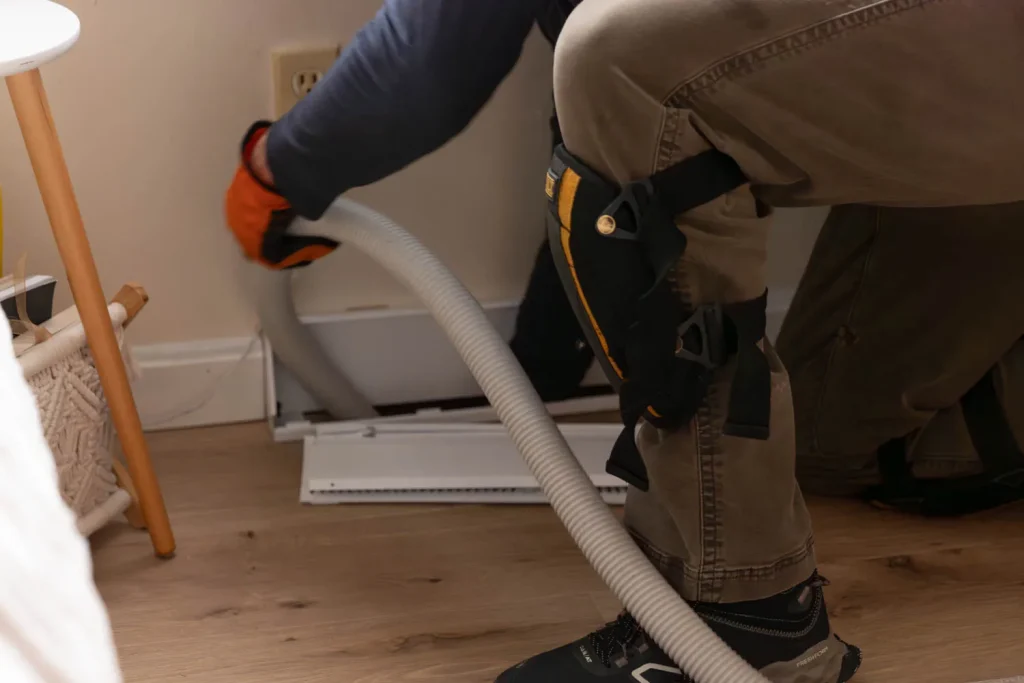
A Kealey’s technician follows a consistent sequence. The job starts with a camera inspection of the ductwork to document visible dust, debris, or drywall residue. Work areas get sealed off to prevent dust from spreading further during the cleaning. From there, the truck-mounted equipment agitates and extracts settled debris from both supply and return lines. Registers and grilles get cleaned. And the entire job is documented with before-and-after photos so results are visible, not just described.
Every job also comes with an upfront price quoted before the crew arrives. The number on the quote is the number on the invoice. No surprises, no add-ons, no pressure.
That pricing structure exists for a reason. The duct cleaning industry has a reputation problem. Some operators advertise rock-bottom prices that turn into aggressive upsells the moment a technician is standing in your living room. Others run through a house in 30 minutes and call the job done. Kealey’s has operated as a family business since 1993, with Brian Kealey (a mechanical engineer by training) and his son Keenan handling every job themselves. Two people, every time, with the same equipment and the same process. That consistency is how you maintain a 5.0 Google rating across 100+ reviews.
When Should You Schedule Duct Cleaning After Remodeling?
The strongest window falls immediately after the final walkthrough, before the HVAC system runs on its normal daily cycle again. Waiting weeks or months allows settled particles to recirculate every time the furnace or air conditioner kicks on. Each cycle pushes more debris into rooms you already cleaned.
The EPA’s guidance supports this targeted timing. Rather than recommending calendar-based service for every household, the EPA favors an as-needed approach. Cleaning after a specific event like a renovation is one of the situations they flag as appropriate.
Here is a practical sequence for homeowners wrapping up a project:
Finish all dust-generating work first, including drywall sanding, demolition, and cabinetry installation. Change or inspect HVAC filters before running the system on a regular cycle. Schedule an inspection to check for construction dust inside the ductwork. Book duct cleaning promptly, rather than deferring it. Confirm the system is clean before resuming daily heating or cooling.
Kealey’s accepts calls at (978) 961-4513 for a same-day quote. Most homeowners have a price in hand within a few hours of calling, not a few weeks.
What Mistakes Delay Clean Air After a Renovation?
Choosing a duct cleaning company by price alone causes the most problems. The industry includes operators who advertise a service they never properly perform. A homeowner who books the cheapest quote often ends up rebooking within weeks once dust resurfaces through the vents.
The other common mistake is assuming the renovation contractor handled it. General contractors contain visible mess. They sweep floors, wipe counters, and haul debris. But the dust that traveled into the ductwork during construction is not on their cleanup checklist. That is a separate job requiring separate equipment.
A few questions worth asking before you hire anyone for post-renovation duct cleaning:
Who performs the actual cleaning? Is it the same team every time, or rotating subcontractors? Is pricing fixed before the crew arrives, or does the number change once someone is in your house? Can references be verified locally? Do they document results with photos, or just tell you the job is done?
Kealey’s Duct and Dryer Cleaning serves homeowners across North Shore MA, Seacoast NH, and southern coastal Maine. If your renovation project just wrapped up and the dust is not going away, call (978) 961-4513 for a quote.
Frequently Asked Questions About Dryer Vent Maintenance
What does home renovation do to air ducts?
Renovations release fine drywall dust, sawdust, and debris that work their way into ductwork even when floors and furniture are covered. Once the HVAC system runs, those particles circulate throughout the home and settle deep into vents and registers. Covering floors helps with the visible mess, but the airborne particulate travels into the system’s intake regardless.
When should you clean air ducts after a renovation?
Schedule cleaning as soon as construction finishes, before the system runs on its normal daily cycle. The EPA treats duct maintenance as issue-driven rather than calendar-based, and post-renovation debris is one of the specific triggers they point to.
Why do allergy symptoms appear weeks after a remodel ends?
Dust hidden inside the ductwork keeps recirculating every time the HVAC system runs. Each cycle pushes a fresh round of construction particulate into your living space. That delayed exposure causes sneezing, coughing, or congestion long after the crew has left.