
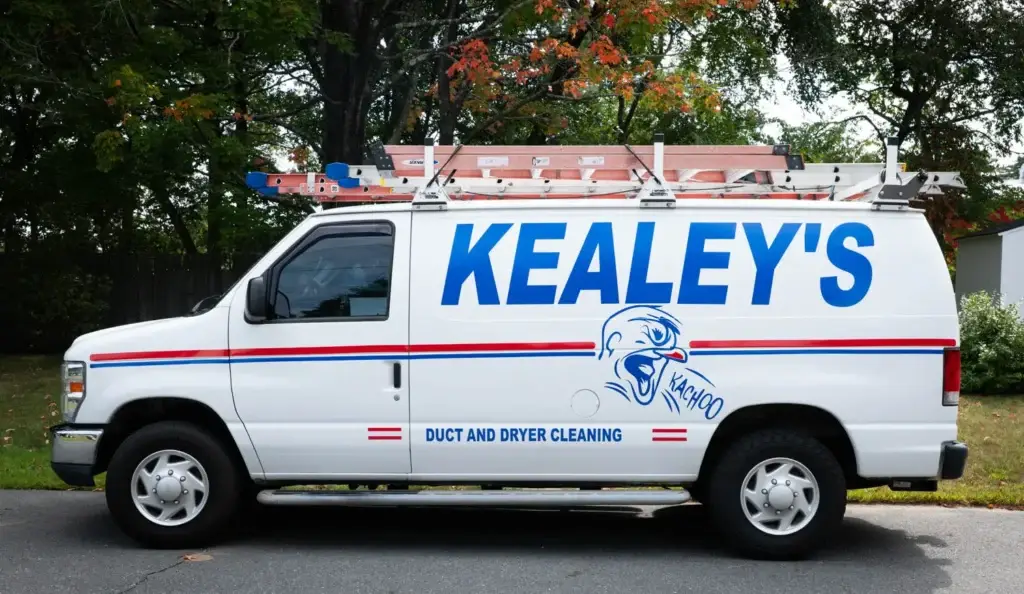
Seasonal dryer vent cleaning before closing a Seacoast NH summer home is essential to prevent lint buildup, moisture damage, and pest nesting. Kealey’s Duct and Dryer Cleaning, serving Rockingham County NH, provides insured service, call (978) 961-4513 to schedule before you lock up for the season.
Seasonal closings call for dryer vent cleaning before you lock up the summer home. Lint buildup left unchecked can pose fire risks and trap moisture over the offseason. Kealey’s Duct and Dryer Cleaning, family-owned, proudly serves Rockingham County NH, call (978) 961-4513 to schedule.
Seasonal property owners along the Seacoast, including Hampton Beach, Rye, and York ME, should schedule dryer vent cleaning before closing homes for winter. Kealey’s Duct and Dryer Cleaning, serving the region, removes lint buildup that traps moisture and invites pests in vacant vents, reducing fire risk and rodent intrusion during vacancy.
Key Takeaways
- Professional dryer vent cleaning removes lint buildup that restricts airflow and reduces dryer efficiency.
- Kealey’s Duct and Dryer Cleaning serves Rockingham County NH.
- Clogged vents create fire hazards; our insured technicians restore safe dryer performance.
- Contact Kealey’s at (978) 961-4513 or kealeys@bkductdryercleaning.com for seasonal home maintenance.
Why Does Closing Your Beach House Need Vent Care?
Shutting down a seasonal property for winter demands more than covering furniture and draining pipes. A closing summer home for winter checklist frequently skips one critical item: the dryer vent. Property owners across Hampton Beach, Rye, and Seabrook often focus on windows, gutters, and plumbing while leaving the laundry room unchecked for months at a time.
Coastal construction throughout the Seacoast complicates the issue further. Many properties in North Hampton and York feature older housing stock, with vent runs that twist through additions, second floors, or converted spaces. Longer, more complex routing traps lint more easily than a straight, short run, and that buildup does not pause just because the home sits empty.
Winterizing a beach house in NH means paying attention to airflow, not just insulation. A vacation home dryer vent left alone since Labor Day keeps the lint it collected all summer, and that buildup raises the seasonal home dryer fire risk even in a machine that sits unused.
Does an unused dryer still pose a fire risk?
Yes. Lint trapped inside the vent line remains flammable whether the dryer runs weekly or sits idle all winter. Leaving heavy lint accumulation trapped inside the exhaust line over the winter leaves a combustible hazard waiting when the home is reopened and appliances run again in the spring.
Can pests get into a dryer vent over winter?
Unsealed or damaged vent covers invite dryer vent critters over winter, including mice, birds, and insects seeking shelter. Nesting material packed into the line blocks airflow completely and creates additional fire and odor problems.
Professional dryer vent cleaning on the Seacoast corrects airflow restrictions before closure, addressing:
- Lint accumulation in long or angled runs
- Damaged, loose, or unsealed vent connections
- Pest entry points at the exterior cap
What Belongs On Your Winterizing Checklist?
Four dryer vent tasks anchor a proper pre-winter service list for Seacoast, New Hampshire vacation properties: cleaning, inspection, cover replacement, and repair. Skipping any one of these leaves a Hampton Beach cottage or a York, ME rental vulnerable to blocked airflow, pest entry, or fire risk during months when no one checks the laundry room.
Dryer vent cleaning removes the lint, dust, and debris that build up inside the vent line and restrict exhaust flow. On a property sitting empty from November through April, trapped lint becomes fuel with nobody around to notice a warning sign. This single step addresses much of the seasonal home dryer fire risk that catches seasonal owners off guard each spring.
Why does a vacation home dryer vent need inspection before closing?
A detailed inspection assesses vent routing, airflow behavior, and the physical condition of the ductwork. Coastal properties near Rye or North Hampton face salt air and shifting temperatures that stress vent material differently than inland homes. Catching a loose joint or a weak section now prevents a bigger repair bill after a long winter of neglect.
Rounding out a closing summer home for winter checklist:
- Vent cover replacement protects the exterior exhaust opening from debris, harsh coastal weather, and pest intrusion.
- Dryer vent repair corrects damaged ductwork, loose connections, and restricted sections before winter conditions make them worse.
What happens if a vent cover is missing or damaged?
An open or broken exterior cover invites moisture, leaves, and small animals into the duct system. Dryer vent critters over winter are a documented problem in unsealed vents left unattended for months. Replacing a compromised cover before closing closes off that entry point entirely.
Why Do Vacant Vacation Homes Attract Vent Critters?
Warm, undisturbed air pulls rodents, birds, and insects straight into an empty dryer vent line. Seasonal properties along Hampton Beach, Rye, North Hampton, Seabrook, and York sit quiet for months at a stretch. That stillness signals safety to nesting wildlife. A dryer vent with no operator around to clear obstructions becomes an open invitation rather than a maintenance afterthought.
Lint itself acts as nesting material, soft, insulating, and easy to pack into a corner of the duct. Once dryer vent critters over winter settle in, droppings and debris combine with trapped lint to choke airflow further. That buildup raises the seasonal home dryer fire risk the moment a homeowner returns in spring and runs a first load without checking the line.
Does an Unused Dryer Still Need Vent Protection?
Yes. Even a dryer that sits idle all winter keeps a vent line connected to the outside air. That opening stays vulnerable regardless of use. Damaged or aging vent covers make entry even easier for small animals, which is why dryer vent replacement work to upgrade outdated vent materials matters before closing up for the season.
Closing a vacation home dryer vent properly involves more than shutting off power. Consider these steps before locking up:
- Inspect the exterior vent hood for damage or gaps
- Clear existing lint and debris from the full vent run
- Confirm the flap seals tightly against wind and pests
Kealey’s Duct and Dryer Cleaning, a family-owned operation, serves Rockingham County, NH and York County, ME, covering the exact towns where these seasonal properties sit vacant each winter.
How Risky Are Vents In Seasonal Homes?
Seasonal homes carry a measurable fire risk when dryer vents sit unused and unchecked for months. Lint accumulates quietly behind the wall, and no one notices until spring. A vent left clogged through a Seacoast winter only adds to that exposure.
Seacoast, New Hampshire properties face a particular structural challenge. Older housing stock, including historic homes near Hampton Beach and scattered throughout Rye, North Hampton, Seabrook and York, often runs dryer vents through longer or more complex pathways than newer construction. These layouts trap lint more easily, and blockages form gradually, out of sight, until they become a genuine seasonal home dryer fire risk.
Why does an empty vacation home still need dryer vent attention?
An unused vacation home dryer vent doesn’t stay static while the property sits dark. Lint already lodged inside continues to compact, and the vent opening itself can become a shelter. Homeowners preparing to close up for the season should treat vent maintenance as a safety item, not an afterthought.
What happens to dryer vents left unchecked all winter?
Blocked exhaust vents restrict airflow and strain dryer performance even before anyone flips the switch again in June. Professional dryer vent service corrects airflow problems and supports safer, more efficient dryer operation once the home reopens for the season.
Key risk factors for Seacoast seasonal properties include:
- Extended vacancy periods with no airflow monitoring
- Older vent runs common to historic coastal neighborhoods
- Vent openings exposed to weather and wildlife over winter
Addressing these conditions before closing reduces exposure considerably heading into the off-season.
Who Handles Dryer Vent Cleaning On The Seacoast?
Kealey’s Duct and Dryer Cleaning is a family-owned business based in Salisbury, MA, and has provided dryer vent cleaning in Hampton, Rye and the rest of the Seacoast since 1994. Brian and Keenan clean the full vent run, from the back of the dryer to the outside cap, and check the cover before you lock up for the season.
Heading out for the season? Tell us when you’re closing up. We’ll clear the whole run, show you photos of what came out, and give you the price before we start. Request your dryer vent cleaning or call (978) 961-4513.
FAQ
Does an unused dryer still pose a fire risk?
Yes. Lint trapped inside the vent line remains flammable whether the dryer runs weekly or sits idle all winter. Leaving heavy lint accumulation trapped inside the exhaust line over the winter leaves a combustible hazard waiting when the home is reopened and appliances run again in the spring.
Can pests get into a dryer vent over winter?
Unsealed or damaged vent covers invite mice, birds, and insects seeking shelter over winter. Nesting material packed into the line blocks airflow and creates additional fire and odor problems.
Who performs dryer vent cleaning for Seacoast seasonal homes?
Kealey’s Duct and Dryer Cleaning, a family-owned and fully insured business serving the Seacoast since 1994, covers Rockingham County NH along with the North Shore of MA and York County ME.