
Late Summer Heat Wave Strain: How Humidity and Heavy AC Use Impact Your Air Ducts
By Kealey’s Duct and Dryer Cleaning · July 2026
Your air conditioner has been running nonstop since June. By late July, most New England homeowners stop noticing the hum of the blower. It just runs. All day, all night, through every heat wave and every stretch of coastal humidity that rolls in off the ocean.
That constant cycling does something to your ductwork that a spring or fall system barely touches. Weeks of uninterrupted AC use pull enormous volumes of air through the same supply and return lines, dragging dust, pet dander, pollen, and moisture along for the ride. The filter catches some of it. The rest settles inside the ducts, caking onto the walls of the metal runs where no filter can reach.
Late summer is when these problems stack up. And by August, homeowners start noticing the results without always connecting them to the ductwork.
Why Does Heavy AC Use Push More Debris Into Your Ducts?
A central air system in a typical New England home cycles air through the ductwork hundreds of times per day during a heat wave. Each pass pulls airborne particles from every room, through the return vents, past the filter, and back out through the supply registers. Particles too small for the filter slip through and settle along duct walls, at joints, and inside the air handler.
During spring and fall, the system runs intermittently. The blower kicks on, runs for a while, shuts off. That on-off pattern gives the system downtime. During a July or August heat wave, there is no downtime. The compressor and blower run for hours straight, sometimes around the clock when overnight temperatures stay above 70.
That sustained airflow acts like a conveyor belt for debris. Dust that might sit harmlessly on a shelf or carpet fiber gets pulled into the system every time someone walks through a room, opens a door, or turns on a ceiling fan. Over the course of a full summer, the accumulation inside the ductwork can be substantial.
Homeowners with pets see this faster. Dog and cat hair and dander circulate aggressively during summer because windows stay closed and the AC handles all the ventilation. A golden retriever shedding its undercoat in July generates enough loose hair to visibly clog a return vent grille in weeks.
What Does Humidity Do to the Inside of Your Ductwork?
New England’s coastal humidity creates a second problem that dry-climate homeowners rarely face. When outdoor relative humidity climbs above 60 or 70 percent, the air your AC system pulls in carries moisture. The evaporator coil removes most of that moisture, but the ducts downstream still carry cooled, slightly damp air through metal runs that sit in hot attics, crawlspaces, and wall cavities.
That temperature difference between the cool air inside the duct and the hot space surrounding it creates condensation. Not always visible dripping, but a thin film of moisture on the interior surfaces of the ductwork. Dust sticks to damp metal far more aggressively than it sticks to dry metal. Over the course of a humid summer, what starts as a light dusting becomes a gummy layer that normal airflow cannot dislodge.
Moisture also creates conditions for mold. A dark, damp duct interior with a steady food source (dust, skin cells, pet dander) is exactly the environment mold colonies need. Homeowners who notice a musty smell when the AC kicks on during August are often smelling the early stages of biological growth inside the ductwork, not a problem with the air conditioner itself.
How Can You Tell Your Ducts Need Attention Before Fall?
A few signals show up consistently in late summer. None of them require special equipment to spot.
Dust accumulating on surfaces faster than usual, even with regular cleaning. That gray film on bookshelves and countertops a day or two after wiping them down is a sign the duct system is recirculating debris faster than your cleaning can keep up.
A musty or stale smell when the AC starts a cycle. This is different from the brief “dusty heat” smell at the start of heating season. A persistent musty odor during summer usually means moisture and organic material have combined inside the ductwork.
Weak or uneven airflow at supply registers. If one room cools noticeably slower than it used to, debris buildup or moisture-related restriction in that duct run is a likely cause. Compare airflow at registers throughout the house by holding a tissue near the vent. Rooms that used to cool quickly and now lag behind are worth investigating.
Allergy symptoms or congestion that worsen indoors. Pollen season in New England peaks in spring, so worsening respiratory symptoms in late July or August, especially symptoms that ease when you leave the house, often point to something circulating inside the home rather than something coming in from outside.
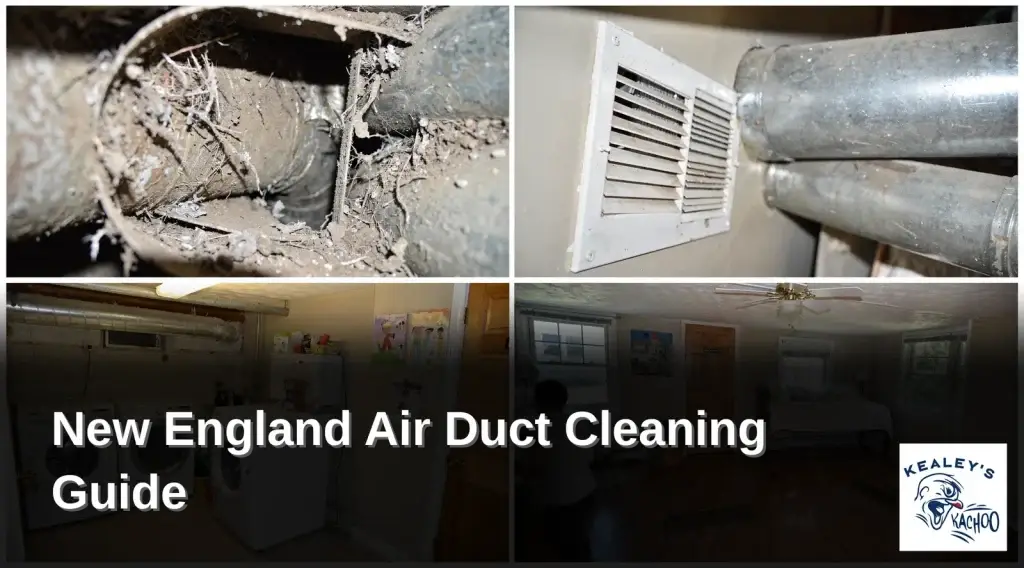
Any of those signs is worth a closer look before the system switches over to heating in October. Kealey’s Duct and Dryer Cleaning photographs every duct system with an inspection camera before and after service. That documentation shows exactly what is inside your ducts before any work starts, and what the system looks like when the job is done. No guessing, no verbal assessments.
Does Running the AC Harder Hurt Your Energy Bills Beyond the Electric Cost?
Yes, and the mechanism is straightforward. Debris buildup inside ductwork restricts airflow. When airflow drops, the system works harder to move the same volume of cooled air through narrower passages. The blower runs longer, the compressor cycles more frequently, and the electric bill climbs.
But the hidden cost is wear on the equipment itself. An air handler pushing air through partially restricted ducts operates under higher static pressure than it was designed for. Over a full summer of heavy use, that added strain shortens the lifespan of the blower motor and can cause the evaporator coil to ice up during peak demand, exactly when you need the system most.
Homeowners who notice their AC struggling to keep up during an August heat wave sometimes assume the unit is undersized or failing. In many cases the system is fine. The ductwork is the bottleneck.
When Is the Best Time to Schedule Duct Cleaning Before Fall?
Late August and September sit in a useful window. The heaviest AC season is winding down, so the system has accumulated a full summer’s worth of debris. But heating season has not started yet, which means cleaning now removes everything the summer deposited before the furnace pushes it back through the house in October.
Waiting until after the furnace kicks on means all that summer buildup, the dust, the moisture residue, the pet hair, gets heated and recirculated through every room in the house on the first cold night. Homeowners who clean ducts between seasons avoid that entirely.
The EPA treats duct cleaning as issue-driven rather than calendar-based. A full summer of heavy AC use in a humid climate, especially in a home with pets or older ductwork, is exactly the kind of trigger they point to.
Kealey’s Duct and Dryer Cleaning has served homeowners across North Shore MA, Seacoast NH, and southern coastal Maine since 1993. Brian Kealey, a mechanical engineer by training, and his son Keenan handle every job themselves with truck-mounted equipment. Every appointment comes with an upfront price before the crew arrives, before-and-after photo documentation, and a no-mess setup. The price on the quote is the price on the invoice.
Call (978) 961-4513 for a same-day quote. Most homeowners have a number in hand within a few hours.
FAQ
Does running the AC all summer really affect my air ducts?
Weeks of continuous cycling pull dust, pet dander, and pollen through the ductwork hundreds of times per day. Particles too small for the filter settle along duct walls and at joints. By late August, a full summer of heavy use can leave noticeable buildup inside the system.
Why does my house smell musty when the AC kicks on?
Coastal New England humidity creates condensation inside ductwork, especially in ducts that run through hot attics or wall cavities. Dust sticks to damp metal and creates conditions for mold growth. A musty smell during AC cycles usually signals moisture and organic material combining inside the ducts.
When should I schedule duct cleaning if my AC ran all summer?
Late August through September is the strongest window. The heaviest AC season is winding down, but heating season has not started. Cleaning now removes everything the summer deposited before the furnace pushes it back through the house on the first cold night.