
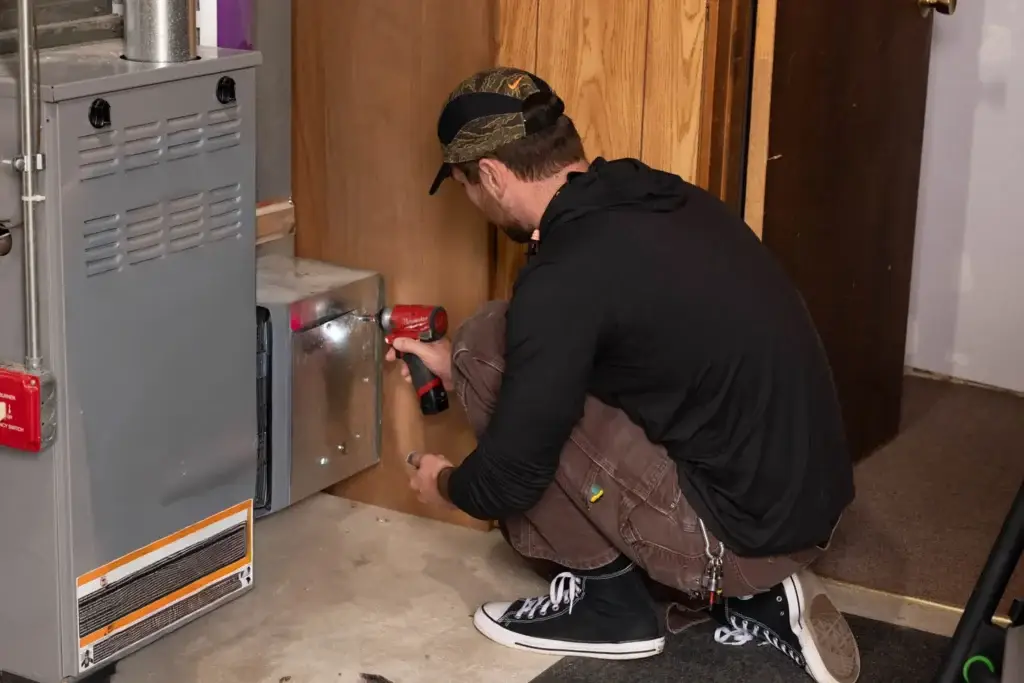
By Brian Kealey, Kealey’s Duct and Dryer Cleaning
Every year around the second week of September my phone starts doing the same thing. Someone in Newburyport or Hampton calls to say the house suddenly smells dusty, or their kid has been coughing since the weekend, and nothing changed except the weather.
Something did change. They turned the heat on for the first time since spring.
I have been cleaning ducts on the North Shore and up the Seacoast since 1994, and this is the most predictable call of the year. Here is what is actually going on, what cleaning your ducts will and will not do about it, and how to tell whether you need anybody at all.
Why do fall allergies get worse indoors once the weather cools?
Three things line up at the same time around here.
Ragweed hits its peak. Ragweed starts releasing pollen in mid-August and does not stop until a hard frost, which on the coast can hold off until late October. The Asthma and Allergy Foundation of America puts a single ragweed plant at roughly a billion pollen grains over a season. Some of that gets into the house every time a door opens.
The windows close. All summer the house was flushing itself out. Once the windows shut, whatever is inside stays inside and gets recirculated instead of replaced.
The heat comes on. A furnace or air handler that sat still for five months fires up and pushes air through a system that has been collecting dust the entire time. That first week is when people notice. The ducts did not get dirty overnight. The system just started moving what was already sitting in there.
Anyone with asthma or seasonal allergies feels that combination. Worth saying plainly: I clean ducts, I do not treat anybody. If symptoms are bad, that is a conversation for a doctor. What I can tell you about is what is in the ductwork.
What actually comes out of a duct system around here in the fall?
Coastal New England has its own version of this. Salt air and summer humidity work into the house all season. Fine dust settles on the inside of the sheet metal and in the flex runs, and when the humidity has been high it packs down instead of staying loose.
On a typical fall job we pull out house dust, pet hair, drywall dust in any house that has had work done, and dead insects near the returns. In a lot of older Colonials and Capes the return path is not sealed duct at all. It is a wall cavity or a joist bay with sheet metal nailed over it, pulling air from the basement and from inside the walls. That is usually where the musty smell is coming from.
Ragweed pollen is in there too, though it is rarely the main event. Pollen is seasonal and light. The settled dust has been building for years.
Does duct cleaning fix seasonal allergies?
No, and I would rather tell you that now than sell you something on a promise I cannot keep.
The EPA’s position is the honest one. They have never found that duct cleaning on its own prevents health problems, and they recommend cleaning as needed rather than on a set schedule.
Here is what it does do. It removes the reservoir. If your system holds years of settled dust, every heating cycle stirs some of it loose and carries it through the house. Take the dust out and the system stops being a source. People notice it as less dust landing on furniture between cleanings, and as the musty smell going away when the heat kicks on.
That is a real improvement and worth paying for. Calling it an allergy cure would be a stretch, and anyone who does is selling. If you want to see what the work actually involves, our air duct cleaning service page walks through the whole process step by step.
When is it actually worth cleaning your ducts?
Any of these and it is worth a look:
Visible mold inside the ducts or on the sheet metal around the registers
Mice, squirrels or insects that got into the ductwork
Dust you can see blowing out of the registers when the system starts up
A musty or stale smell every time the heat or the AC comes on
Renovation work since the last cleaning, especially anything that threw drywall dust
You just bought the house and have no idea when anything was last done
None of those apply? You can probably wait. Plenty of my phone calls end with me telling someone their system is fine, which is not great for a day’s revenue but has worked out over 32 years.
What about the filter?
This is where I part ways with most of the advice online.
You will read that you should drop a MERV 13 filter in for allergy season. Be careful with that one. MERV measures how much the filter catches, and a higher number also means more resistance. Most residential systems are designed around MERV 8 to 11. Put a dense filter into a system that was never sized for it and you restrict airflow, which makes the blower work harder, hurts your heating performance, and in a bad case ices the coil up come summer.
If somebody in the house has real allergy trouble, a better order of operations:
Make sure the filter you already have is getting changed. Every three months is the usual advice, monthly during pollen season if the system runs a lot.
Check that it actually fits the slot with no gaps. Air takes the easy path, and a filter with a half inch of daylight around it is doing very little.
Then ask an HVAC contractor whether your system can handle a denser filter before you buy a case of them.
We do not sell filters or air purifiers, so I have no stake in which one you pick. I just see a lot of restricted systems.
The other fall job nobody thinks about
Dryer use climbs in the fall. Nobody hangs laundry outside in October, sweatshirts and heavier bedding come out of storage, and the machine runs more loads with more lint in each one.
A vent line that got by all summer is the one that starts taking two cycles to dry a load in November. Same house, same dryer, more demand on a line that was already restricted. Lint packed near the back of the drum also sits inches from the heating element, which is the part of this that matters most.
Fall is the right time to get ahead of it, and it is the quicker of our two jobs, usually under an hour. The dryer vent cleaning page covers what is involved and what we clear.
Our Professional Process and Quality Assurance Standards
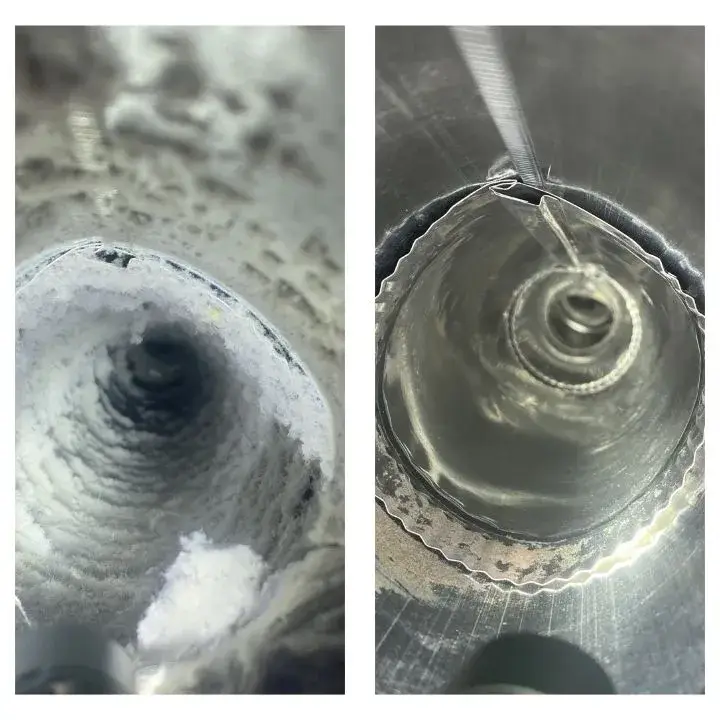
You call or send the form and tell us what is going on. We ask about the house, the system and where the dryer line runs, then give you a written price before anyone comes out. On the job the protection goes down first, and you get before and after photos of the same spots when we are done, so you are not taking our word for anything.
We work across Essex County from Georgetown north, the New Hampshire Seacoast, and into southern York County Maine. If you are near home base, the Salisbury air duct cleaning page has the local detail.
And if it turns out you do not need us this year, we will tell you that too.