

Forced hot air systems in older Newburyport and Amesbury homes push accumulated dust, pet dander, and debris from ductwork directly into living spaces every heating cycle. Older homes often have leaky, uncleaned ducts that trap years of buildup. Clogged filters and dirty coils compound the problem, recirculating particles that settle on furniture within hours of cleaning.
Key Takeaways
- Forced-air heating systems circulate dust throughout your home by pushing air through dirty ducts and filters.
- Dirty furnace filters fail to trap particles, allowing dust accumulation to increase significantly during heating season.
- Professional duct cleaning removes hidden dust buildup that standard filters miss, improving air quality immediately.
Why Is My House So Dusty When the Heat Runs?
Forced-air heating equipment ranks among the most overlooked sources of excess household dust. Older homes in Newburyport and Amesbury often have ductwork that has carried decades of dust. The furnace itself can quietly push that buildup right back into living rooms and bedrooms.
The mechanics explain why dust coming out of heating vents feels so persistent once autumn arrives. A furnace works by circulating air throughout the entire home to deliver warmth, pulling air in, heating it, then pushing it back out through the duct system. That same circulation is the primary way dust finds its way into the equipment in the first place. Every cycle gives trapped dust another ride through the vents.
Why does the house feel dustier once the heat kicks on?
Ductwork sits mostly untouched for months during warmer weather, collecting dust, pet dander, and fine debris. Once the system fires up for the season, that settled material gets stirred loose and sent straight into the air. This is a common reason older homes notice a sudden spike in dust each fall.
In many older homes in Newburyport and Amesbury, return vents often pull air from unfinished basements and crawl spaces. Dust and debris from these areas settle into the ductwork over time and then are circulated back through the registers each time the heating system runs.
That pattern explains two common homeowner complaints:
- A house dusty in winter, despite regular cleaning
- A dusty house forced hot air system that seems to “blow” dust directly into rooms
Neither issue points to a broken furnace. Both point to ducts and components that have been quietly accumulating debris, waiting for the next heating cycle to send it airborne again.
Why Does Dust Blow Out of Heating Vents?
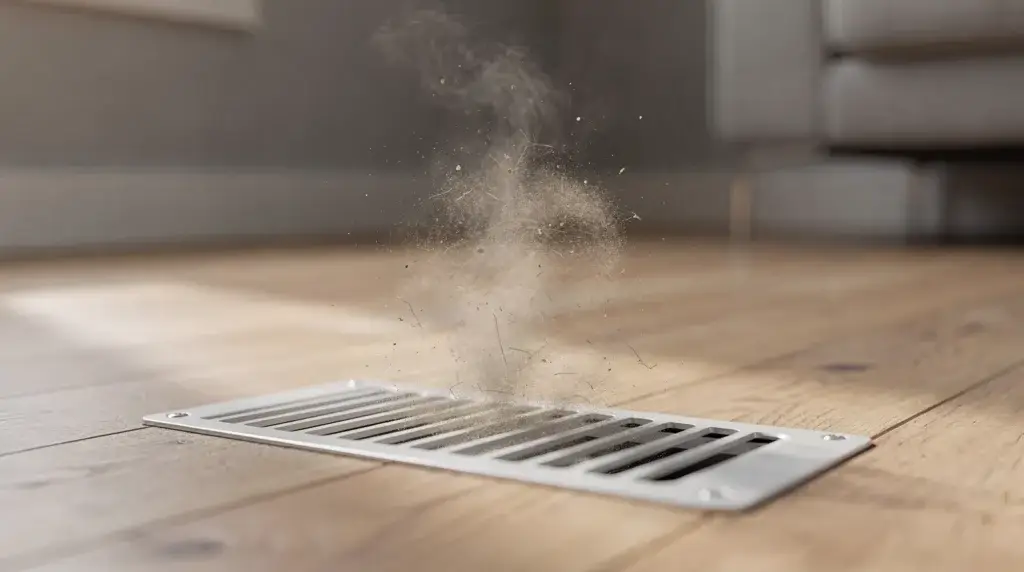
Forced hot air systems pull household particulates back into the furnace through return air vents, then redistribute them to every room. Return vents draw air from closets, bedrooms, and living spaces, carrying the same airborne particles that make up visible household dust. That dust does not disappear inside the ductwork. It settles, accumulates, and rides the next heating cycle straight back out through the registers.
This cycle explains why dust coming out of heating vents feels constant in older Newburyport and Amesbury homes once the furnace kicks on for the season. Decades-old duct runs in these houses tend to hold more buildup than newer systems, simply from years of accumulated use.
Why does my house get dustier in winter?
Furnaces run far more often once temperatures drop, moving air through the ducts dozens of times a day. Each cycle stirs up settled particles and pushes them back into living spaces. A dusty house forced hot air setup, in short, recirculates whatever sits inside the ductwork all autumn and winter long.
Coastal New England adds its own burden. The long heating season common to Seacoast and North Shore towns, including Newburyport and Amesbury, places extra strain on HVAC ductwork, allowing dust and debris to build up over time. We see the same pattern in older homes in Amesbury, where long return runs pull air from unfinished basements.
Professional cleaning addresses the source directly rather than the symptoms:
- Removes dust and pet dander trapped deep inside duct runs
- Clears buildup from trunk lines and branch runs, not just the registers
- Stops accumulated debris from recirculating through the registers
Kealey’s approaches duct cleaning with this full cycle in mind, treating the ductwork itself as the dust source, not just the furnace filter.
Why Does My House Get Dustier in Winter?
Forced hot air systems restart after months of dormancy and immediately push months of accumulated particles through the home. House dusty in winter complaints spike for a reason: furnaces sit idle all summer while dust and debris settle quietly inside ductwork, on blower components, and across heating elements. The first cold snap sends that buildup straight through the vents.
Timing makes this worse for older Newburyport and Amesbury homes. Why is my house so dusty often traces directly to the week heat first kicks on for the season, a period when household dust climbs fast. That first week of heat is when most homeowners notice dust settling on furniture days after they clean.
What causes dust coming out of heating vents?
Dust accumulates in ducts and on furnace parts throughout warmer months when the system runs less often. Once heat cycles resume, that settled material becomes airborne again and travels through every register in the house. Older homes with aging ductwork tend to show this pattern more severely than newer construction.
Does the filter make a difference?
A clogged or long-overdue filter lets dust pass through and recirculate, so checking or changing the filter at the start of the heating season is the first step. However, a filter cannot remove dust already settled inside the ducts. NADCA recommends inspecting ductwork once a year, a schedule that matches field patterns Kealey’s technicians see across New England homes season after season:
- Dust settling on furniture within a day or two of cleaning
- Visible dust puffing from registers when the heat starts
- Gray buildup on supply and return vent covers
- Dust returning to the same rooms no matter how often you clean
Could Leaky Ducts Be the Real Culprit?
Yes, gaps and loose seams in ductwork rank among the most common hidden sources of household dust. Leaky ductwork, clogged filters, and poor airflow balance combine to create what homeowners experience as dust coming out of heating vents every time the furnace cycles on.
An older Newburyport or Amesbury home does not need a broken furnace to produce a dusty living room. A quiet system failure inside the ductwork, not a malfunctioning unit, is usually the culprit. Hidden issues inside the system or the home itself can keep recirculating dust no matter how often the surfaces get wiped down.
Why does dust keep returning after cleaning?
Dust returns because the forced hot air system is pulling it from somewhere beyond the visible room. Gaps in old duct seams draw in attic or crawlspace particles, then push them straight through the registers. Clogged filters make the problem worse by failing to trap what the system is pulling in.
What usually causes a dusty house during forced hot air heating?
A mix of mechanical issues typically explains a dusty house forced hot air problem. The following factors appear most often in older homes:
- Loose or disconnected duct joints that pull in attic, basement, or wall-cavity debris
- Airflow imbalance between supply and return vents, which increases particle circulation
- Filters left in place too long, allowing dust to pass through instead of being captured
Kealey’s Duct and Dryer Cleaning has worked on New England homes since 1994. Across 32 years of service, the pattern Brian describes stays consistent: leaky ducts, not broken equipment, drive most dust complaints.
What Should Newburyport Homeowners Do About Dust?
Newburyport homeowners facing dust that keeps returning should schedule a whole-house air duct cleaning before heavier winter airflow makes the problem worse. Skipping that step lets dust pack down inside the system until air can barely move through it, forcing the furnace to push particles harder out of every register. In older homes with original ductwork, that buildup happens faster than most people expect.
How does professional cleaning actually help?
A thorough visit clears the pathway lint and dust use to collect, restoring normal airflow before a blockage forms. That single annual service is the difference between dust settling on furniture and dust staying contained where it belongs.
What happens during a service visit?
Each appointment follows a consistent, documented process designed to protect the home and set clear expectations upfront. Homeowners know the cost and scope before any work begins.
- An upfront quote, so there are no surprises once the technician arrives
- A careful, clean job inside the house, with debris contained
- Before-and-after photos documenting exactly what came out of the system
That documentation matters most in Newburyport’s older housing stock. Decades of accumulated dust often sit untouched inside the ducts.
Kealey’s operates as a family-owned business based in Salisbury, MA, serving neighboring communities including Newburyport. Homeowners dealing with persistent dust, whether it is collecting on windowsills or blowing visibly from heating vents, can call (978) 961-4513 to schedule service. A phone call and one seasonal appointment, timed before the heating system runs hard through winter, address the root cause rather than the symptom showing up on every surface.
FAQ
Why does my house get so dusty when the heat is on?
Forced hot air systems pull household particulates through return vents and push them back through every room. Dust that settles in ductwork over warmer months rides each heating cycle straight back into living spaces.
Why does dust come out of the heating vents specifically?
Return vents draw air from closets, bedrooms, and living spaces, carrying dust into the furnace system. That dust accumulates in the ducts instead of disappearing, then redistributes through the registers during the next cycle.
Why does dust seem worse in older Newburyport and Amesbury homes?
Older ductwork has carried decades of dust, and return vents in older homes often pull air from basements and crawl spaces. Kealey’s Duct and Dryer Cleaning has served the North Shore since 1994 with whole-house air duct cleaning that clears that buildup.
Conclusion
Kealey’s Duct and Dryer Cleaning has cleaned forced hot air systems across Newburyport, Amesbury and the North Shore since 1994. We clean the whole system, show you photos of what came out, and give you the price before we start. Request your air duct cleaning or call (978) 961-4513.