
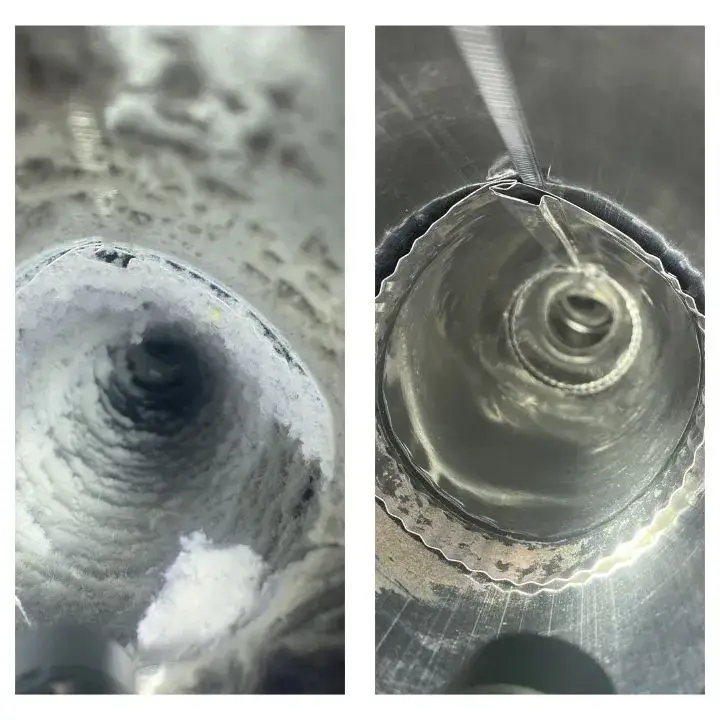
Warm, humid dryer exhaust condenses into liquid water when it meets cold air trapped inside long or disconnected vent runs, common in older Seacoast and North Shore homes. Crimped ducts, excess lint buildup, and unconditioned attic or crawlspace sections worsen condensation, producing drips, ceiling stains, mold, and rust around vent seams during colder months. For more information, check out our dryer vent cleaning services.
Key Takeaways
- Disconnected dryer vents act as water distillers, causing heavy water accumulation in basement areas.
- Restricted airflow and condensation buildup create moisture problems in dryer vent systems year-round.
- Improper vent setup during colder New England months increases water pooling and dripping issues.
- Mold, rust, and reduced drying performance result from water in dryer vents left unaddressed.
Why Is Water Coming Out of Your Dryer Vent?
Restricted airflow, condensation buildup, and an improperly configured exhaust line explain most cases of water coming out of dryer vent openings. Moisture problems inside a vent run rank among the most common dryer complaints homeowners raise. The issue affects both drying performance and the physical condition of the vent system over time.
North Shore and Seacoast households tend to notice the problem most often during colder months. Cold outdoor air meets warm exhaust air inside the duct, and that temperature clash sets the stage for trouble.
What Causes Dryer Vent Condensation?
Dryer vent condensation forms when warm, moist exhaust air cools faster than it can exit the vent run. Lint buildup restricts the pathway, trapping that moist air inside the duct instead of pushing it outdoors. The trapped air cools against the duct walls, turns to liquid, and pools at low points. Left unaddressed, this cycle produces wet lint in dryer vent sections that clumps, hardens, and blocks airflow even further.
Three conditions typically combine to cause the leak:
- Restricted airflow, usually from lint accumulation along the duct interior
- Condensation buildup, driven by temperature differences between exhaust air and duct surfaces
- Improper vent setup, including excessive length, sagging sections, or poor slope toward the exterior termination
Why Does This Happen More in Winter?
Cold exterior temperatures amplify the gap between warm dryer exhaust and the duct’s surrounding air. That wider gap accelerates condensation, making dryer vent leaking in winter far more frequent than in warmer seasons. Uninsulated duct runs through attics, crawl spaces, or exterior walls face the highest risk. Those sections cool fastest and hold the least residual heat.
What Causes Dryer Vent Condensation in Winter?
Temperature differences drive most cold-weather moisture problems inside a dryer exhaust system. Warm, humid air leaves the dryer drum and travels through ductwork exposed to frigid outdoor temperatures, and that mismatch forces moisture out of the air. The result is often mistaken for a leak when it’s actually dryer vent condensation forming along the duct walls.
Cold zones and lengthy duct runs make the problem worse. Water buildup concentrates where duct sections pass through unheated spaces or stretch across long distances before reaching the exterior wall. Adding insulation around exposed sections reduces contact with cold air. Limits where dryer vent leaking in winter conditions can take hold.
Why Do Older Homes Have Worse Vent Condensation Problems?
Older housing stock across the Seacoast region frequently has longer, more complicated vent routing than newer construction. Historic homes in downtown districts and older coastal neighborhoods often route ducts through multiple turns and unheated cavities. These extended, complex paths trap both lint and moisture more readily, giving condensation more surface area to form on before air ever reaches outside.
Do Sagging Ducts Cause Water Pooling?
Yes. Sagging sections or ductwork without proper downward slope create low points where water collects instead of draining toward the exterior vent. Once moisture pools, it mixes with wet lint in dryer vent sections, forming a damp mass that blocks airflow further.
High-turnover rental properties face an accelerated version of this risk. Seasonal beach cottages and vacation rentals see lint accumulate between guest stays faster than annual inspection schedules can detect, leaving condensation-prone blockages unaddressed for months at a stretch.

Could a Ceiling Stain Mean a Bigger Leak?
In coastal New England homes, dryer ductwork frequently passes through unheated basements, crawlspaces, or attics where warm, moist exhaust air rapidly condenses against cold pipe walls.
Older homes in Newburyport, where long vent runs pass through cold attics, are especially prone to this.
That kind of damage builds gradually. A duct separated at a joint, or crushed under a floor, collects condensation until it soaks through drywall and plaster. What looks like a roof or pipe issue can actually be dryer vent condensation pooling inside a hidden duct run.
Why do dips in a vent line cause leaks?
Low points in ductwork trap moist air as it cools, and that trapped moisture condenses into standing water. Inspectors flag any vent with dips as a defect for this reason. A duct with sagging or uneven sections can function almost like a still, collecting and releasing water instead of venting it outside.
What fixes a leaking vent run?
The corrective approach uses a seamless duct with a steady, unbroken downward pitch toward the exterior discharge point. No dips, no sagging sections, no low spots for moisture to collect. A single downward slope keeps warm, damp air moving outward instead of pooling and condensing.
Left unaddressed, this pattern repeats every laundry cycle:
- Ceiling stains reappear or spread after drying
- Drywall stays soft or discolored near the vent path
- Musty odors develop in the space below the run
Persistent staining near a dryer vent warrants inspection of the full duct path, not just the visible ceiling.
How Does Wet Lint Raise Your Fire Risk?
Wet lint can collect in a vent run and restrict the escape of warm, moist exhaust. As that buildup dries, it leaves lint in a system that needs clear airflow. According to the National Fire Protection Association (NFPA), dryers and washing machines are involved in thousands of home structure fires each year, with failure to clean lint being the leading contributing factor.
Cleaning the lint screen is one part of dryer maintenance. Lint can also build up behind the dryer and in the venting system. The U.S. Fire Administration advises cleaning the back of the dryer, checking for damaged, crushed or restricted venting, and making sure the outdoor vent cover opens while the dryer operates.
Where Does the Real Fire Danger Hide?
Lint buildup behind the dryer and restrictions in the exhaust vent both deserve attention. The vent pipe carries warm, moist air outdoors, so its condition matters alongside the lint filter and the area behind the appliance. An inspection checks where airflow is restricted rather than assuming the problem is in one part of the system.
The U.S. Fire Administration recommends having a dryer installed and serviced by a professional. Its Clothes Dryer Fire Safety guidance calls for cleaning the lint filter before and after each cycle and checking the venting system for damage or restrictions.
Homeowners can watch for these warning signs:
- Lint accumulating faster than usual near the trap
- A burning smell during drying cycles
- A dryer running hotter or longer than normal
- Damp, clumped fibers inside the trap area
A burning smell or unusual heat during a drying cycle calls for stopping the dryer and having the cause checked before using it again.
When Should You Call a Professional?
Water coming out of the dryer vent, persistent dryer vent condensation, or a recurring water stain on the ceiling near the dryer vent calls for an inspection of the full run. Cleaning removes lint and debris that restrict airflow. A disconnected, crushed or poorly routed duct needs its physical condition assessed as well, so the cause of the moisture is addressed rather than just the visible drip.
Kealey’s founder brings an engineer’s look at how vents are routed to every job.
Wet lint in the dryer vent compacts fast. Once damp fibers pack down, airflow drops and moisture has nowhere to escape except back into the duct, the wall cavity, or the ceiling below. Left unaddressed, a dryer vent leaking in winter only gets worse as condensation freezes and thaws inside the line, narrowing the passage further with each cycle.
How Often Should Dryer Vents Be Inspected?
Industry guidance from NADCA points homeowners toward a yearly cleaning schedule, a timeline consistent with decades of field service calls. An annual visit keeps the run clear before lint has the chance to pack down into a mass that air cannot move through.
What Does a Professional Cleaning Actually Fix?
A thorough cleaning removes lint and moisture-trapping debris from the vent run, from the dryer connection to the exterior exhaust point. While professional cleaning removes dangerous lint blockages and restores airflow, ongoing condensation may indicate duct routing defects, uninsulated pipe runs, or broken dampers that require mechanical correction to meet standard building codes (IRC M1502).
Homeowners across North Shore MA, Rockingham County NH, and York County ME should watch for these signs before scheduling service:
- Visible dripping or pooling near the vent hose
- Musty odor in the laundry room
- Clothes that stay damp after a full cycle
- Ceiling staining below or near the laundry area
Kealey’s Duct and Dryer Cleaning, a family-owned business serving these regions, can be reached at (978) 961-4513 to schedule an inspection before minor moisture becomes structural damage.
FAQ
Why is water dripping from my dryer vent?
Warm, humid dryer exhaust condenses into liquid water when it meets cold air trapped inside long or disconnected vent runs. Crimped ducts, lint buildup, and unconditioned attic or crawlspace sections worsen the condensation, producing drips, stains, and rust around vent seams.
Why does dryer vent condensation worsen in winter?
Cold exterior temperatures widen the gap between warm dryer exhaust and the surrounding duct air, accelerating condensation. Uninsulated duct runs through attics, crawl spaces, or exterior walls face the highest risk since those sections cool fastest.
What causes restricted airflow in a dryer vent?
Lint accumulation along the duct interior blocks the pathway, trapping moist exhaust air inside instead of letting it exit outdoors. This trapped air cools against the duct walls, turns to liquid, and pools at low points.
Conclusion
In closing, water accumulation at your dryer vent demands immediate attention to prevent structural damage, mold proliferation, and continued operational inefficiency. The underlying causes, whether condensation buildup, improper ductwork installation, or lint obstruction, require systematic diagnosis and professional remediation. Addressing these issues promptly restores your dryer’s performance and protects your home’s integrity. Experienced professionals possess the specialized equipment and expertise necessary to identify root causes. Implement lasting solutions that standard maintenance cannot achieve.
Water at Your Dryer Vent? Talk to Kealey's
If you see water, wet lint or a ceiling stain near your dryer vent, the vent line needs a closer look. Kealey’s is a family-run team that has cleaned dryer vents across Seacoast NH, southern Maine and the North Shore since 1994. Contact Kealey’s today to schedule your dryer vent inspection.